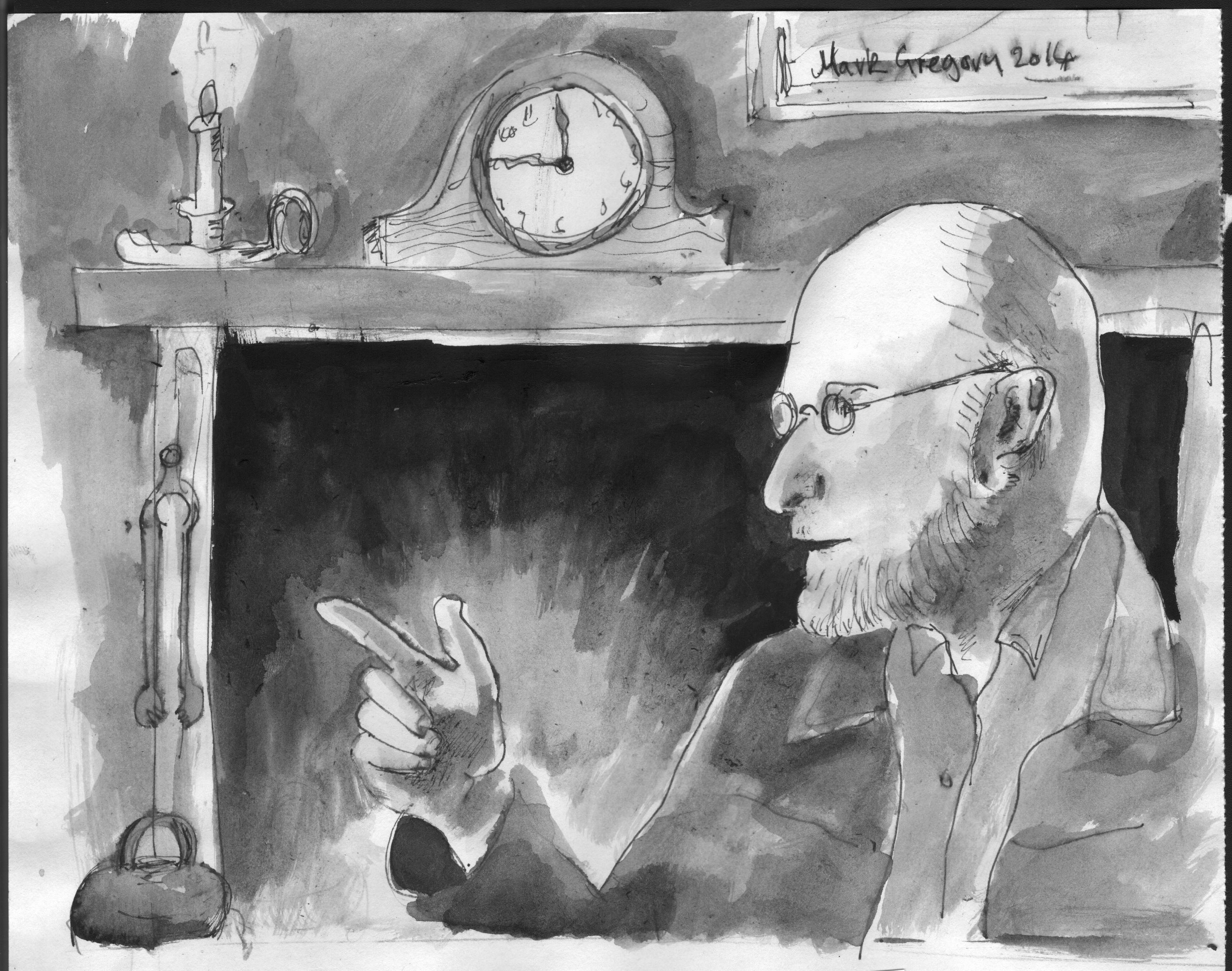
Before the days of radio and television people entertained themselves! In 19th century Cornwall 'Droll Tellers' travelled around telling tales, singing songs and playing tunes to listen and dance to. In return they were given bed and board.
We know of several of these Droll Tellers. Anthony James from Cury was a blind man who travelled Cornwall guided by his son. He told tales, sang songs, and he and his boy both played violin. We have a picture of his activity from roughly 1795 to 1828.
Another such Droll Teller, from West Penwith, was 'Frosty' Foss. Frosty was an artisan who worked as a stone mason, blacksmith and handyman. But he also played the oboe and told tall tales. Similarly, Billy Hicks, a teacher from Bodmin played the violin and told tales. He was such a good storyteller that he became known to the writer Charles Dickens, who took him to London to entertain his friends including William Makepeace Thackeray.
Despite the name, the stories, or 'drolls' they told weren't necessarily humorous. They were tales, often of local events and local people, that were good fun but also conveyed lessons from life at a time when there were few schools. Nowadays storytellers give them the generic name of 'Fireside Tales'. These tales were entertainment for adults and children alike. Surprisingly few involved fairies! Often the tales were passed from one storyteller to another, sometimes changing as they did so. That way tales gradually acquired the wisdom, humour, and superstition of many generations.
There were undoubtedly many more local tellers of tales whose names we don't know. There are undoubtedly many more traditional tales. You will have noticed I have not mentioned droll tellers from East Cornwall. We know they were there - Dr Jonathan Couch recorded many tales from the Polperro area, but all his sources are not known. But it is is certain that much more remains to be discovered. These tales are still remembered by the older generations, though sometimes in a fragmentary state. Often they are told within a family or a community, quite unaware that those stories are part of an oral tapestry that covers not just Cornwall, or even Britain. They are a distinctly Cornish part of a world wide oral tradition.
With the advent of internet, radio and TV based entertainment there is a danger that these tales may be lost, and with them their value as fun, education, and social history. I encourage you to think back, remember the tales you were told as a child, and pass them on.
Mike O’Connor
Mike talks about droll tellers 37 minutes into this wonderful episode of The Piskie Trap. The first half hour is more generally about the history of storytelling.
https://shows.acast.com/the-piskie-trap/episodes/storytelling-in-cornwa…